
Welcome
Welcome to the website for supporting post-school transition for students with special educational needs and disabilities (SEND). This page has been created as a support to students, parents, schools and employers to develop more inclusive and equitable post-school transition practices for students with SEND in Ireland.
Developed based on research with Irish special schools, the page aims to be a repository of resources, key contacts and ideas on ways schools and employers can begin to develop new practices to support transition.
Post-School Transition
Preparation for post-school transition should be an equal experience for all students, including students with SEND. However, Irish and international research demonstrates that post-school outcomes for students leaving special schools are often limited to health -funded day services. Students in special schools do not have access to guidance counsellors and other preparation activities such as Transition Year Programme.
As the Transition Year Programme is not available in special schools, many students do not have access to Work Experience, unless they access it through the higher level senior cycle curricula such as Leaving Certificate Applied (LCA) or QQI. This precludes many students from this essential transition preparation activity.
The research which underpins this website demonstrated that students in special schools have a rich vision for life post-school. They want access to employment, further and higher education and to access society. They are excited to explore the world of work and those that had engaged in Work Experience through Leaving Certificate Applied (LCA) or QQI modules in their school, shared how transformative it was.
Where can we start?
We can start with understanding and exploring concepts such as Transition Preparation and Transition Planning and identifying the components that contribute to effective practice.

Transition Preparation
“The curriculum that schools offer and related activities that support skill development and independence for students during their time in school. Examples include academic skill development, personal & social skills, independent living skills, assessment & profiling of students strengths, interests and areas for development.”
Connolly, Scanlon & Corby, 2025
Transition Planning
“The process undertaken by schools in planning and supporting their students to leave special school. Transition planning involves a range of activities which may include consultation on post-school options with students, their families and other professionals. It may also include work experience, visits to post-school settings and meeting with relevant personnel.”
Connolly, Scanlon & Corby, 2025
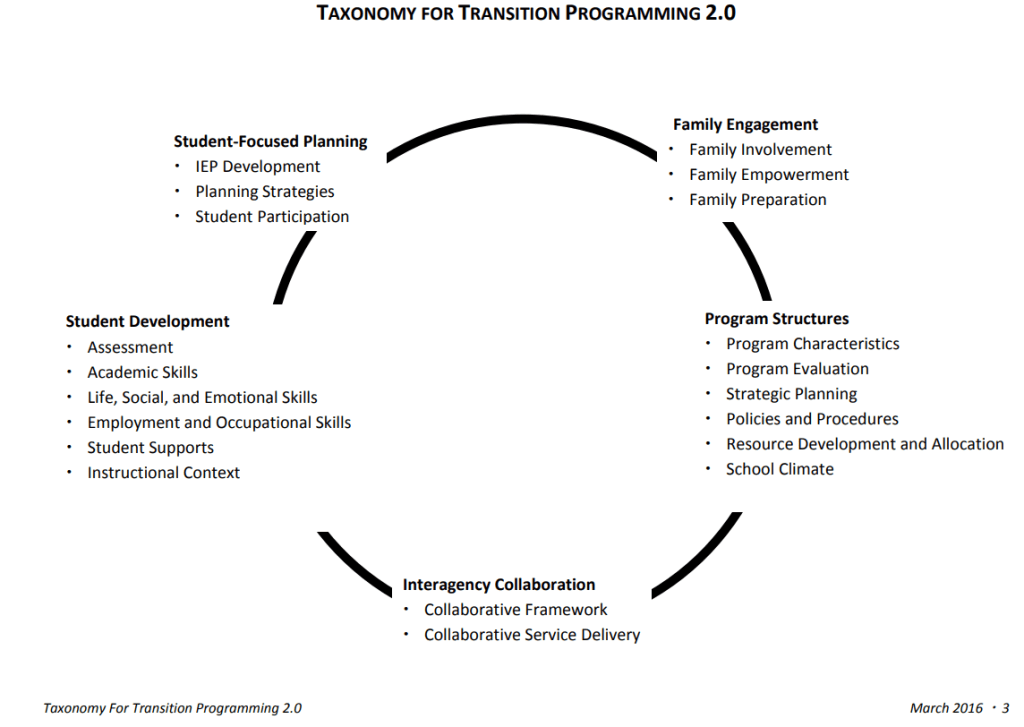
Kohler’s Taxonomy for Transition Programming 2.0 (Kohler et al., 2016)
This is a simple to use, evidence based transition framework that can support schools and families in preparing for and navigation post-school transition. Specifically, this website will be a support to those developing employment and occupational skills with students with SEND.

Work Experience Guidelines
A dedicated page which explores how to embed work experience practices in school settings

Research
This page includes research published on post-school transition in the Irish special school context

Webinars
A series of webinars are available for teachers and school leaders to explore ways in which they can enhance post-school transition practices, including work experience.

Helpful Links
Links to other organisations and to key policy documents
Learn
How to use the guidelines
Leanne presents a brief overview of the work experience guidelines and how schools could implement them.
Latest News
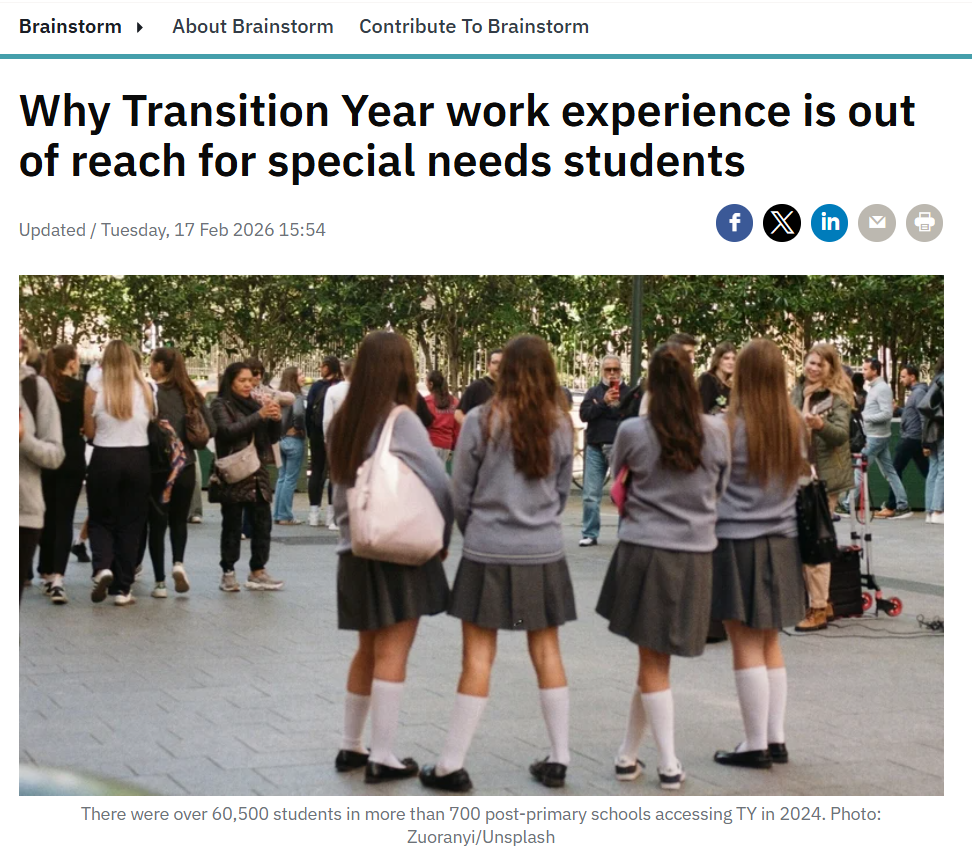
In February 2026, Leanne wrote for RTE Brainstorm on the challenges experienced by special schools in providing work experience for their students.
Read here:
Online courses
Want to learn more?

Online Webinar
Leanne will be facilitating the first in a series online webinars for interested special schools and mainstream post-primary schools on the new Work Experience Guidelines and related supports.
Duration
1 hour 15mins
Availability
Wednesday 29th April 2026 – 5pm-6.15pm
Options
There is no limit to the number of participants per school setting that can attend.
Please register for the webinar here:
https://dcu-ie.zoom.us/webinar/register/WN_nn1G3MCFRF23E7SI7cEQGQ#/registration
days
hours minutes seconds
until
An Introduction to the Work Experience Guidelines